
The US-Israel War Against Iran: Its Consequences; Part – 4
By Asif Haroon Raja
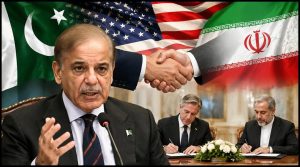
Pakistan’s Triumph on the Global Stage
The world was astonished during the G7 summit when US President Donald Trump not only praised Pakistan, but also acknowledged before the international community the country’s importance in promoting global peace.
Referring specifically to Pakistan’s leadership, President Trump was quoted as saying:
“Pakistan’s Prime Minister had already told me that something extraordinary was about to happen—something that people would find hard to believe. Today, the world has witnessed it.”
Trump acknowledged that Pakistan and Qatar worked tirelessly, day and night, to make this historic agreement possible. He publicly expressed his gratitude to Pakistan before the international community.
This is being portrayed as a historic achievement of Pakistan’s foreign policy—one that has silenced its critics. When the leader of the world’s most powerful country publicly recognizes your country’s efforts and sincerity at a prestigious forum such as the G7, it becomes a matter of pride for every Pakistani. This is what genuine diplomacy and national prestige on the world stage look like!
Pakistan has always projected itself as an advocate of peace, and its cooperation with Qatar in helping facilitate this agreement is presented as proof that Pakistan continues to play a vital role in promoting regional and global stability.
Supporters of this view argue that Pakistan’s leadership and armed forces worked discreetly behind the scenes to uphold the country’s prestige and contribute to peace.
Preventing a Potential Sunni-Shia Regional War
History may record that a major Sunni-Shia conflict between Iran and several Arab States appeared imminent, a conflict that could have drawn Pakistan into its vortex.
Pakistan’s political and military leadership helped prevent a war among Muslim countries which, had it erupted, might have become one of the bloodiest conflicts in Islamic history.
The United States and Israel had already made extensive preparations, but Pakistan positioned itself between Iran and the Arab States and worked to prevent Gulf countries from becoming active participants in the conflict.
Pakistan’s Gains from Mediation
How much economic benefit did Pakistan derive from the US-Iran war?
People often ask what Pakistan actually gained by mediating between the United States and Iran during the conflict. Did Pakistan strengthen its economy through this role?
To answer that, one must first understand that international mediation is not the same as a tribal jirga.
In tribal jirgas, particularly among the Afridis, tribal elders often take a guaranteed amount ranging from five million to ten million rupees from both parties to ensure compliance with the decision.
The money remains with the elder as long as the settlement stands, and in many cases it remains there indefinitely because such mediation has no expiry date.
Some simple-minded people have mistakenly assumed that international mediation works in the same way.
They seem to believe that because Pakistan mediated between the United States and Iran, dollars would start pouring into Pakistan from both sides.
In reality, international mediation works quite differently. Consider the example of Qatar. During the present situation, Qatar reportedly pledged around $10–12 billion to Iran, including approximately $6 billion in loans and another $6 billion in previously frozen assets.
In other words, it is often the mediator whose pocket becomes lighter rather than heavier.
The United States considers itself the world’s leading power and does not hand out money merely because someone mediates. In fact, given America’s current economic circumstances, it seldom misses an opportunity to seek financial contributions from wealthy Arab states.
Why would it pay anyone for mediation? As for Iran, its economic condition is such that even if it were to give Pakistan one billion Iranian Tomans, its value in Pakistan would amount to little more than one hundred thousand rupees.
What Pakistan has gained most from this process is diplomatic significance. Through its mediation efforts, Pakistan has not only strengthened its ties with the United States but has also helped alleviate Iran’s longstanding concerns and suspicions regarding Pakistan.
During this period of mediation, Pakistan also expanded its defence cooperation with Saudi Arabia and projected itself as an important security and defence partner. At the same time, it succeeded in attracting the attention of Türkiye, Egypt, and Qatar.
After a long interval, Pakistan also managed to secure supportive remarks from the European Union regarding Kashmir, while European leaders and institutions expressed appreciation for Pakistan’s constructive role. These were important diplomatic achievements.
The reason Pakistan has not yet been able to translate them into substantial economic gains lies in the global trade pressures resulting from instability around the Strait of Hormuz, which has affected economies across the world.
Nevertheless, there is hope that in the coming years Pakistan will be able to capitalize on the importance it has acquired through this role, further enhance its standing in the international community, and eventually convert its diplomatic achievements into tangible economic benefits.
Strategic Shift in Pakistan-Iran Relationship
The shifting dynamics of regional energy diplomacy have taken center stage following reports that Pakistan and Iran are moving to revive their long-stalled oil and gas pipeline initiative.
Both nations have expressed a renewed interest in bridging a decade of structural delays, which were primarily driven by stringent international tracking penalties and financing bottlenecks, to build a resilient bilateral trading network.
Project planners indicate that upcoming high-level technical sessions will focus on formulating actionable execution layouts and securing structured funding frameworks.
Energy analysts suggest that successfully operationalizing the route could allow Islamabad to safely diversify its external energy imports while simultaneously providing Tehran with vital new export channels amidst evolving global pacts.
The evolving landscape of regional energy diplomacy has gained renewed momentum amid reports that Pakistan and Iran are seeking to revive their long-delayed oil and gas pipeline project.
Both countries appear committed to overcoming years of structural impediments, including international sanctions-related constraints, financing challenges, and geopolitical uncertainties, in an effort to establish a more robust framework for bilateral energy cooperation.
According to project planners, forthcoming high-level technical consultations will focus on developing practical implementation mechanisms, finalizing project modalities, and identifying sustainable financing arrangements.
Energy experts believe that the successful completion of the pipeline could significantly enhance Pakistan’s energy security by diversifying its import sources, while simultaneously providing Iran with an important export outlet in an increasingly dynamic regional and global energy environment.
To be concluded


