
Pakistan’s Diplomatic Resurgence in a Multipolar World and Motivated Negative Trends
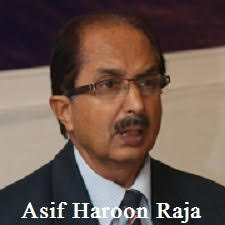
By Asif Haroon Raja
History shows that both civilian and military leaders across the world have resorted to war under varying pretexts in pursuit of national interests, strategic objectives, or geopolitical ambitions.
Peace has usually followed only after one side has been defeated or when all parties have become exhausted by prolonged conflict.
China, as a matter of state policy, has consistently advocated peaceful coexistence and economic cooperation rather than military confrontation.
Pakistan too has repeatedly declared peace to be a central pillar of its foreign policy.
Indeed, successive governments in Pakistan have often pursued conciliation and restraint, at times to the point of excessive accommodation.
The other States of South Asia have likewise expressed a desire for peaceful coexistence. The principal obstacle to lasting peace in the region, however, has been India’s hegemonic ambitions.
Transformation from Unipolarity to Multipolarity
The international system is undergoing a profound transformation. The era of uncontested unipolarity is gradually giving way to a more complex multipolar order in which emerging and middle powers are acquiring greater influence.
In this evolving environment, States that possess strategic location, military credibility, diplomatic flexibility, and economic potential are gaining renewed importance.
Ambitions of Imperialist Powers
India desires complete hegemony in South Asia, and in its bid to create Akhand Bharat, it has disturbed the peace of South Asia.
In the Middle East, Israel’s expansionist policies are viewed as a major source of instability.
At the global level, the United States’ interventionist policies and extensive military engagements abroad have made the world unsafe and insecure.
Each of these strategically aligned powers has pursued strategic objectives that extend beyond its borders. To advance these objectives, they have employed a combination of diplomatic pressure, covert operations, proxy conflicts, economic leverage, and military force.
Peace agreements have often followed only after the balance of power has been shaped in their favour.
No insurgency or proxy war can be sustained indefinitely without external sponsorship, financial backing, logistical support, or political patronage.
Pakistan’s Military And Diplomatic Resurgence
Pakistan’s ability to maintain constructive relations with competing regional and global actors has enhanced its relevance at a time when bridge-building and conflict management have become increasingly valuable diplomatic assets.
For the first time in contemporary history, a comparatively weaker Pakistan successfully challenged the military dominance of the self-proclaimed superpower of South Asia during the four-day conflict and emerged with enhanced credibility.
Pakistan’s Rising Strategic Relevance
As a result, Pakistan has increasingly been viewed as a net contributor to regional security and stability.
Today, Pakistan’s voice carries greater weight in many international forums, while India’s influence on certain regional issues appears to have diminished.
Rise of Middle Powers
The growing importance of countries such as Pakistan, Türkiye, Saudi Arabia, Qatar, Indonesia, and Iran reflects a broader redistribution of influence from traditional power centres.
These States are no longer content with merely reacting to global developments; they increasingly seek to shape outcomes through diplomacy, economic partnerships, and regional cooperation.
Their collective role in conflict resolution and economic connectivity may prove decisive in determining the contours of the emerging international order.
In the Middle East, Iran has altered the strategic equation and is negotiating from a position of confidence. The recently signed Memorandum of Understanding largely reflects Iranian priorities and perspectives.
The rise of influential middle-power Muslim States is likely to reshape future geopolitical alignments. These nations are increasingly positioned to participate in setting regional norms, influencing diplomatic outcomes, and contributing to the emerging international order.
The rise of influential middle-power Muslim States is likely to reshape future geopolitical alignments.
Internal Stability
Nevertheless, lasting peace and meaningful influence require strong foundations at home. A nation can play a constructive regional and global role only when it is politically stable, socially cohesive, economically resilient, and militarily capable.
Motivated Negative Trends
In Pakistan’s case, internal divisions, vested interests, and groups promoting external agendas often pose a greater challenge than external adversaries.
The unchecked misuse of social media has further aggravated polarization, misinformation, and societal fragmentation.
Rather than serving as a tool for constructive discourse, it has too often become a vehicle for discord, weakening the social fabric and undermining national cohesion.
India, Israel, Afghanistan, and anti-Pakistan elements operating within Pakistan are visibly unsettled by Pakistan’s growing diplomatic stature and international relevance.
Consequently, they are making concerted efforts to downplay or discredit its achievements.
When Pakistan emerged victorious in the four-day conflict with India, detractors rushed to attribute the success entirely to China, denying Pakistan’s own military professionalism, strategic planning, and operational competence.
Similarly, when Pakistan earned recognition as a trusted mediator between Iran and the United States, contributed to arranging the April 12 ceasefire, facilitated high-level engagements, hosted important meetings, and helped pave the way for the signing of a Memorandum of Understanding, the same critics sought to minimize Pakistan’s role by assigning the principal credit to Qatar.
The impression they seek to create is that Pakistan was merely a spectator during the 106-day conflict, standing on the sidelines and occasionally throwing a few buckets of water on a raging fire without exerting any meaningful influence on events.
The Military Blamed
At the heart of their narrative lies the argument that military rulers are inherently war-oriented and anti-peace, whereas civilian governments are naturally inclined toward peace and democratic values.
They hold the military rulers responsible for undermining democracy and fostering authoritarian traditions.
Critics routinely hold military rulers solely responsible for Pakistan’s political setbacks while overlooking the broader historical context and the role played by civilian politicians, bureaucratic elites, foreign interference, and structural weaknesses.
While each military regime had its shortcomings, it is equally true that periods under Ayub Khan, Zia-ul-Haq and Musharraf witnessed notable economic growth, improved governance indicators and greater financial stability. History cannot be understood through selective accountability.
Today, a similar pattern is visible in the criticism directed at Field Marshal Asim Munir. They blame the military establishment for the political misfortunes of Pakistan Tehreek-e-Insaf, and incarceration of its leader Imran Khan.
Accomplishments Overlooked
Security gains against terrorism, diplomatic achievements, economic initiatives undertaken through SIFC, and Pakistan’s enhanced international standing are frequently ignored by critics who attribute every success to external actors while assigning every setback to domestic institutions.
If Pakistan’s role was truly insignificant, it is difficult to explain why world leaders, regional governments, and Iran itself have publicly acknowledged and appreciated Islamabad’s diplomatic efforts.
The political, diplomatic, and economic achievements of the incumbent administration are dismissed on the grounds that ordinary citizens have yet to experience substantial relief in their daily lives.
One is compelled to ask: if Pakistan’s contributions are so insignificant, why are world leaders publicly acknowledging and appreciating its role? Why are messages of gratitude and goodwill being sent to Islamabad? Why is the PM of Pakistan hosting and signing the peace accord in Geneva?
Why has Iran repeatedly expressed appreciation for Pakistan’s efforts and friendship? To the critics, however, all this amounts to little more than a carefully staged facade.
It must not be forgotten that Pakistan’s mediation efforts contributed to ending the hostilities, preventing a broader regional conflict, and averting the danger of a nuclear war.
Conclusion
National unity, political stability, economic resilience, and military strength remain the indispensable pillars of lasting influence and security.
In the emerging multipolar world, only those nations that combine national unity, political stability, economic resilience, diplomatic agility, and military strength will be able to safeguard their sovereignty and shape the course of regional and global affairs.
In Pakistan’s case, the greatest threat is not always external aggression but internal fragmentation. Nations are weakened when political rivalries, vested interests, and foreign-sponsored narratives erode national cohesion.
The irresponsible use of social media has intensified polarization and misinformation, turning a powerful instrument of communication into a vehicle for division.
No country can aspire to regional leadership while remaining internally divided.
National unity, political stability, economic resilience, and military strength remain the indispensable pillars of lasting influence and security.
About the Author
Brigadier (Retd) Asif Haroon Raja, SI (M) is a war veteran. He is Command and Staff Course and War Course qualified, holds an MSc in War Studies, and served as Defence Attaché in Egypt and Sudan, as well as Dean of the Corps of Military Attachés in Cairo.
He is a defence, security, and geopolitical analyst, columnist, featured columnist of IntelDrop magazine Washington, author of five books, former Chairman of Thinkers Forum Pakistan, Patron-in-Chief of Centre for Development Studies Think Tank, Director of Meesakh Research Centre; he regularly appears on media platforms.


