
Seven Years After August 5:Kashmir Is Still Waiting for the World to Act
By Dr. Ghulam Nabi fai, Chairman
World forum for Peace & Justice
Washington, D.C.
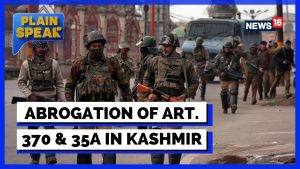
Seven years ago, on August 5, 2019, the Government of India revoked Articles 370 and 35A of its Constitution, ending the limited autonomy that Jammu and Kashmir had enjoyed since India’s independence. To New Delhi, the move represented national integration and constitutional reform. To many Kashmiris, it represented something fundamentally different: the unilateral dismantling of a political compact and an attempt to permanently alter the status of a territory whose future remains internationally disputed.
Seven years later, the consequences of that decision continue to reverberate far beyond the Valley of Kashmir.
Kashmir has long occupied a unique place in international diplomacy. Since 1948, the United Nations Security Council has adopted a series of resolutions recognizing the disputed character of Jammu and Kashmir and calling for a peaceful resolution acceptable to its people. While India has consistently argued that constitutional changes within its territory are sovereign domestic matters, many Kashmiris and legal scholars contend that the events of August 5, 2019, are incompatible with the spirit of those international commitments and with the principles governing disputed territories.
Regardless of where one stands on the legal debate, one fact is beyond dispute: the Kashmir question has not disappeared simply because one party declared it settled. Indeed, if anything, the years since 2019 have demonstrated precisely the opposite.
Successive legal and administrative measures—including changes to domicile rules, land ownership regulations, and political representation—have fundamentally transformed the governance of the region. Critics argue these measures seek to reshape Kashmir’s demographic, political, and economic landscape before any political settlement can be achieved. Supporters describe them as necessary reforms to promote development and equal rights. The divide between these competing narratives underscores why unilateral action cannot substitute for a negotiated political process.
Equally troubling has been the shrinking space for political dissent, independent journalism, and civil society. International human rights organizations, legal experts, and numerous observers have repeatedly expressed concern over prolonged detentions, restrictions on expression, and limitations on independent monitoring. Transparency is not a threat to democracy; it is one of its defining characteristics. The world, however, has largely looked away. That silence carries consequences.
Kashmir remains one of the few unresolved territorial disputes involving two nuclear-armed states. The military escalation following the Pahalgam attack in 2025 demonstrated how quickly tensions between India and Pakistan can spiral toward a wider confrontation. Whatever conclusions are drawn about responsibility for that tragedy, the crisis reminded the world that Kashmir is not merely a bilateral disagreement. It is a continuing international security concern whose potential consequences extend well beyond South Asia.
History teaches that unresolved conflicts do not simply fade with time. They become more deeply entrenched, more difficult to resolve, and more dangerous to ignore.
The international community has invested extraordinary diplomatic energy in conflicts across Europe, the Middle East, and Africa. Kashmir deserves no less sustained attention—not because it is more important than those crises, but because its continued neglect risks creating another.
A durable peace cannot be imposed through constitutional amendments, demographic engineering, or military control. Nor can it emerge from slogans or maximalist rhetoric. Lasting peace requires dialogue, political courage, and meaningful engagement with the aspirations of the people whose future remains at stake.
As this anniversary is observed, Kashmiris continue to call for measures that many international human rights advocates have likewise urged: the restoration of civil liberties, the release of political detainees held without due process, unrestricted access for United Nations Special Rapporteurs and independent human rights organizations, freedom for international journalists to report from the region, and conditions conducive to a peaceful political process consistent with international law and the wishes of the people of Jammu and Kashmir.
Whether one agrees with every aspect of these demands is secondary to a larger principle: enduring peace cannot be achieved while one side believes its political voice has been permanently excluded. There is another audience that deserves recognition on this anniversary.
For decades, the people of Pakistan have demonstrated remarkable solidarity with Kashmir. Every August 5, citizens from every province, every political persuasion, and every walk of life gather to express support for the people across the Cease-fire Line. Elderly men and women, young children carried on their parents’ shoulders, students, professionals, laborers, and religious leaders have all participated in these demonstrations. Their commitment has never gone unnoticed by Kashmiris. For that solidarity, the people of Kashmir remain deeply grateful. Yet gratitude must be accompanied by a candid appeal.
I am reminded of a meeting in New York on September 23, 2021, when Pakistan’s then Foreign Minister, Shah Mahmood Qureshi, met with the Board of the World Kashmir Awareness Forum. During that discussion, Dr. Imtiaz Khan, a distinguished Kashmiri-American scholar, offered an observation that has remained with me ever since.
“Qureshi Sahib, we thank you for raising awareness of Kashmir. But you raise it on the streets of Multan and Lahore. Can you raise it on the streets of Tokyo, Paris, Brussels, London, Washington, Ottawa, Canberra, and other world capitals?”
That challenge was not directed at one individual. It was directed at Pakistan’s entire diplomatic establishment. It remains equally relevant today.
The struggle for Kashmir will not be advanced by domestic demonstrations alone, however sincere or well attended. It requires sustained engagement with international institutions, legislatures, universities, think tanks, media organizations, legal forums, and civil society across the democratic world. Public diplomacy, strategic communication, and principled advocacy must become central pillars of Pakistan’s foreign policy if it wishes to keep Kashmir on the international agenda.
Ultimately, this is not only about Kashmir. It is about whether international commitments retain meaning when confronted by geopolitical realities. It is about whether the principles of self-determination, human dignity, and the peaceful settlement of disputes remain universal values or become selectively applied depending upon the balance of power.
Seven years after August 5, the people of Kashmir continue to wait—not for sympathy, but for principled engagement; not for rhetoric, but for diplomacy; not for charity, but for justice. History will eventually judge not only those who acted, but also those who chose to remain silent.
Note:
Dr. Ghulam Nabi Fai can be reached at:
WhatsApp: 1-202-607-6435
gnfai2003@yahoo.com.


