
Self-Determination in Focus at the UN But Forgotten in Kashmir
By Dr Syed Fai
Two important gatherings at the United Nations Headquarters in New York this April have brought renewed attention to a principle that lies at the very core of international law: the right of peoples to self-determination. On April 20, 2026, a conference titled “Self-Determination in Times of Peace and Conflict: Internal Relations and Indigenous Diplomacies” convened scholars, diplomats, and advocates to reflect on the evolving meaning of this right in contemporary global politics.
Just days later, on April 27, 2026, UNESCO hosted another event, “Strengthening Engagement with Indigenous Peoples: Knowledge Systems, Languages, Policy and Practice,” emphasizing the urgent need to protect indigenous identities, governance, and participation in decision-making processes.
These discussions are not abstract. The International Working Group for Indigenous Affairs (IWGIA) has underscored that genuine empowerment and equality for peoples—particularly indigenous communities—require secure access to land and natural resources, alongside robust protection of their political rights within national legal frameworks and governance systems. In essence, self-determination is not merely a historical slogan; it is a living principle tied directly to dignity, justice, and sustainable peace.
It is against this backdrop that the question arises: why revisit the issue of self-determination today?
At a time when the international system is strained by conflict and competing geopolitical priorities, it is worth recalling that self-determination remains one of the foundational pillars of the United Nations. As Secretary-General António Guterres observed on February 21, 2020, support for this right “remains both a source of pride for the Organization and a crucial pillar of its work going forward.”
Yet, for all its rhetorical prominence, self-determination continues to be applied selectively—and nowhere is this contradiction more glaring than in the case of Jammu and Kashmir.
The principle itself is neither ambiguous nor new. It is embedded in Article 1(2) of the UN Charter, reaffirmed in the Universal Declaration of Human Rights, codified in the International Covenants of 1966, and reinforced through landmark General Assembly resolutions such as 1514 (1960) and 2625 (1970). Together, these instruments affirm a simple but powerful truth: all peoples have the right to freely determine their political status and pursue their economic, social, and cultural development without external interference.
Historically, self-determination has provided a peaceful pathway for resolving international disputes. From post-World War I plebiscites to the wave of decolonization across Asia and Africa, it has offered legitimacy where force could not. Even in complex situations, the United Nations has demonstrated its capacity to administer impartial processes—East Timor, Namibia and Southern Sudan remain compelling examples.
Kashmir, however, remains an unresolved exception. When the dispute was first brought before the United Nations in 1948, there was clear agreement by both India, Pakistan that the future of the territory should be decided through a free and impartial plebiscite under UN auspices. This understanding was formally recognized in United Nations resolutions and accepted by both governments.
The framework was precise: demilitarization, appointment of a UN Plebiscite Administrator, and a fair vote conducted free of coercion. These modalities were affirmed by successive UN representatives, including Sir Owen Dixon of Australia and Senator Frank Graham of the United States. Yet implementation has remained stalled—not because it is unworkable, but because it has lacked political will.
Over decades, geopolitical shifts allowed the issue to drift. Arguments once framed around Cold War dynamics have long lost their relevance. In today’s world, the continued denial of a UN-supervised process appears increasingly difficult to justify. The consequences, however, are very real.
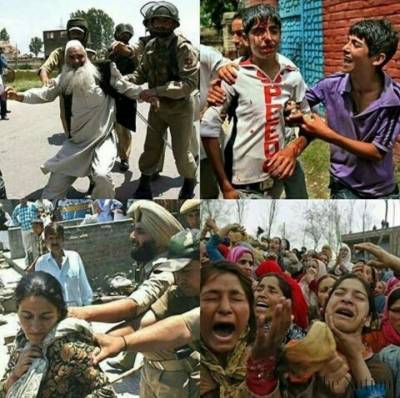
The denial of self-determination is not just a legal inconsistency; it is a human rights concern. The Vienna Declaration of 1993 explicitly characterizes such denial as a violation of fundamental human rights. For the people of Kashmir, this has meant decades of uncertainty and suffering. For South Asia, it has meant recurring tensions between two nuclear-armed neighbors—posing risks far beyond the region. In April 2025, President Donald J. Trump facilitated a ceasefire after recognising the potential for nuclear escalation between India and Pakistan. He accurately identified Kashmir as the central issue driving tensions between the two nations.
Ambassador Volkan Bozkir, then President of the UN General Assembly, emphasized on October 14, 2020 the need to ensure that self-determination is implemented “in accordance with the Charter of the United Nations.”
A durable peace cannot be built on selective application of universal principles. It must rest on legitimacy—and legitimacy, in Kashmir, can only come from a process that reflects the will of its people.
The path forward is not unknown. It lies in returning to commitments already made: respect for the UN Charter, adherence to international agreements, and recognition of the inalienable rights of the people concerned.
The international community must confront a difficult question: can self-determination remain credible if it is applied selectively? If the United Nations is to retain its moral authority, it must bridge the gap between principle and practice. Kashmir is not merely a regional dispute—it is a test of the international system itself.
Peace is not achieved by managing conflicts indefinitely. It is achieved by resolving them justly. And justice, in Kashmir, begins with honoring a promise long overdue.
The most pressing requirement is to establish a favorable environment in Kashmir. This may be achieved by revoking restrictive legislation, like ‘Unlawful Activities Prevention Act (UAPA)’, ‘Public Safety Act’ (PSA) and unconditionally releasing political prisoners, including Mohammad Yasin Malik, Shabir Ahmed Shah, Masarat Aalam Bhat, Aasia Andrabi, Sofi Fehmeeda, Nahida Nasreen, Khurram Parvez and others.


