
The Multiplicity of Crises Facing Pakistan
By Asif Haroon Raja
A Call for Reflection
The people of Azad Jammu and Kashmir (AJK) must remember the hardships endured under Dogra, Sikh, and Afghan rule, as well as the contemporary difficulties faced by residents of Indian-administered Kashmir, where the narrow Kashmir Valley has been turned into the biggest concentration camp in the world.
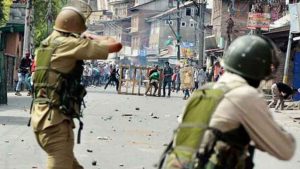
Saga of Indian Occupied Kashmir
Indian Illegally Occupied Jammu & Kashmir (IIOJK) has been transformed into one of the most heavily militarised territories in the world, effectively functioning as a vast military garrison governed through draconian laws and extraordinary security measures.
More than a million military and paramilitary personnel remain deployed across the region, exercising pervasive control over every aspect of civilian life. They have been given a license to kill and rape without fear of accountability.
According to numerous human rights reports and Kashmiri accounts, the population has endured decades of repression, arbitrary detentions, extrajudicial killings, enforced disappearances, and collective punishment.
The primary objective of this coercive apparatus is not merely to suppress dissent but to systematically weaken the Kashmiri struggle for self-determination. The policies pursued since August 2019 are aimed at altering the demographic composition of the disputed territory through land appropriation, settlement of non-residents, and measures designed to marginalise the indigenous Muslim population.
Custodial deaths, staged encounters, torture, and prolonged detentions have become recurring features of the conflict, while reports of sexual violence against women have long been cited as a tool of intimidation and subjugation. Muslim girls in Kashmir are forcibly married to the Hindus.
Over the decades, the conflict has left deep scars on Kashmiri society. Tens of thousands have lost their lives, countless families have been displaced or shattered, and a large number of women continue to live as ‘half-widows’, uncertain whether their disappeared husbands are alive or dead. Mass graves and graves without identity are in abundance.
The continuing denial of fundamental political rights, coupled with the heavy military presence, has turned the Kashmir dispute into one of the gravest and longest-running human rights and humanitarian crises of the modern era.The paradise on earth has been turned into a hell.
AJK A Secure Haven
Pakistan represents a source of security and political support for the Kashmiri cause. The people of AJK must value these advantages, understand the life of the Kashmiris in IIOJK and in AJK, and should avoid confrontation with the State, and seek solutions through peaceful and constructive means.
Questions About the Leadership
It is worth noting the financial circumstances of certain leaders associated with the Joint Awami Action Committee (JAAC). Some of the so-called leaders have amassed vast wealth over a relatively short period and are enjoying a high profile lifestyle.
These developments warrant scrutiny and transparency. Some of its leaders have benefited financially from political agitation and pressure tactics, and enjoy external sources of support.
The movement’s leadership should be held accountable for explaining the origins of its funding and for addressing concerns regarding its political objectives and affiliations.
Unravelling of the JAAC
Signs of internal divisions have begun to emerge within the JAAC movement.
A leaked telephone conversation, involving a member of the Committee’s overseas leadership based in the United Kingdom and a prominent activist from Kotli, is in circulation on social media. The audio reveals growing disagreements within the movement.
According to accounts of the conversation, the activist expressed serious reservations about recent developments and he announced his unwillingness to continue supporting the movement.
This leak is evidence that cracks are appearing within the organisation and that confidence in its leadership may be eroding among some of its own supporters.
Disinformation Campaign by JAAC
Certain activists associated with the JAAC were caught producing staged videos intended to create the impression of mass casualties.
Individuals were filmed lying on the ground and posed in ways designed to simulate the aftermath of a violent crackdown.
The resulting footage was used to support claims that Pakistani security forces had opened indiscriminate fire on unarmed protesters and caused large numbers of casualties.
Similar videos portraying confrontations with police were also filmed. Such material was created to influence public opinion, generate sympathy, and shape international perceptions of the unrest.
Charges of Sedition and Anti-State Activities
The Home Department of the Government of Azad Jammu and Kashmir (AJK) has formally initiated legal proceedings against Shaukat Nawaz Mir and Khawaja Mehran Arshad on charges of sedition and anti-state activities.
The AJK Government has ordered investigations into criminal speeches, writings, publications, and electronic communications attributed to the two individuals.
An inquiry against Shaukat Nawaz Mir has been ordered under Section 124-A of the Azad Jammu and Kashmir Penal Code.
Under Section 196 of the Criminal Procedure Code, the relevant District Police Officers have been directed to complete the investigations.
The concerned district police authorities have also been instructed to conclude their inquiries and submit charge sheets before the competent courts.
The government stated that the link between the leaked audio recording and the violent incidents that occurred in Rawalakot has further strengthened the grounds for investigation.
The Government has directed the Senior Superintendent of Police (SSP), Muzaffarabad, to complete the investigation against Shaukat Nawaz Mir, while the SSP, Mirpur, has been tasked with completing the investigation against Khawaja Mehran Arshad.
It is pertinent to note that an audio recording of central leaders of the now-banned JAAC surfaced recently. In the recording, the central leaders Shaukat Nawaz Mir and Khawaja Mehran Arshad can be heard discussing plans related to protests in AJK.
In the seditious audio conversation, Shaukat Nawaz Mir is heard explaining the significance of Rawalakot upon the planned long march on 9 June , starting from Bhimber, Barnala, Mirpur, Kotli, Rawalakot and on to Muzaffarabad.
Shaukat Nawaz has gone underground, but is exhorting the public through his video messages not to abandon the long march and to face the security forces boldly, promising them that soon he will join them.
Involvement of RAW
India’s RAW is aligned with intelligence agencies of Israel, Afghanistan, UAE, and linked with anti-Pakistan elements, such as banned TTP, BLA, PTM, BYC, TLP, a political party and a few subnational political parties.
The ISI has nabbed five RAW agents from Jhal near Muzaffarabad, involved in disturbing law and order in AJK. Laptops containing sensitive data, arms and equipment have been confiscated. They were providing digital support to JAAC.
Arrest of JAAC Activist and Links with Indian Agencies
A prominent activist associated with the JAAC, identified as Bilal, has been arrested in Rawalakot and is currently in police custody. According to reports, a forensic examination of the suspect’s mobile phone revealed links with Indian intelligence agencies.
Analysis of the suspect’s WhatsApp communications reportedly indicated that he was receiving direct instructions from an individual identified as “Colonel Kumar” regarding efforts to create unrest in AJK.
The communications revealed coordinated efforts aimed at destabilising the law-and-order situation in the region through various activities.
Furthermore, investigators claim that the suspect was offered PKR 500,000 for every police officer targeted and killed as part of the purported campaign.
Another spy named Shehzad, a Khawarij from Afghanistan and connected with the JAAC has been arrested.
The AJK Govt has announced a reward of Rupees ten millions for the arrest of four absconding JAAC leaders, namely Sardar Aman Khan, Khawaja Mehran Arshad, Umar Nazir Kashmiri and Shaukat Nawaz Mir.
The Indian Involvement
The Indian Prime Minister Narendra Modi has repeatedly expressed hostility toward Pakistan and remains determined to exert pressure on Islamabad.
Having recognised Pakistan’s ability to respond to direct military threats, India has increasingly relied on hybrid tactics and internal destabilisation efforts. The unrest in AJK is a broader Indian strategy aimed at destabilising Pakistan through indirect means.
Within this framework, a third front has emerged in the form of the JAAC. The objective is to create unrest, weaken state authority, and exploit local grievances for strategic purposes.
Indian Frustration and the Remarks of General G.D. Bakshi
The comments made by retired Indian Army officer General G. D. Bakshi on the Indian TV channel is evidence of Indian interest in the unrest within Azad Kashmir.
General Bakshi suggested that rights-based movements in AJK would only serve India’s interests if they generated instability and weakened state control in the region.
He claimed that considerable resources had been invested in AJK and expressed frustration that unfolding events had not produced the anticipated outcomes.
The remarks of General Bakshi and other retired Indian commentators provide insight into how some voices in India perceive political agitation in AJK—not as a struggle for rights, but as a potential instrument for weakening Pakistan’s position in the region.
Pakistan Military A Symbol of Stability
The leadership of Pakistan’s armed forces, frustrated sinister plans by maintaining stability and preventing the situation from escalating into a broader crisis.
Pakistan’s armed forces have played a central role in safeguarding the country’s security and strategic interests, including the development and protection of its nuclear deterrence.
Attacks on the military leadership are viewed not merely as criticism of an institution, but as criticism of the State itself.
A Word of Caution to Misguided People of AJK
For those in AJK who have adopted an anti-state posture, the future generations may judge them harshly if their actions contribute to weakening the Kashmir cause, or undermining Pakistan’s support for it.
“He is not one of us who calls to tribalism, he is not one of us who fights for tribalism, and he is not one of us who dies for tribalism.” – Al Quran
Excessive nationalism and identity-based politics risk dividing communities and damaging a cause that has historically depended upon unity and collective purpose.
The Rise and Fall of Populist Narratives
Populist narratives often rise rapidly because they appeal to public frustrations through emotionally powerful slogans:
Opposition to oppression, promises of justice, rejection of established authority, and denunciation of political opponents as corrupt.
However, sustaining such movements is far more difficult than launching them. Even when some grievances are genuine, populist movements frequently fail to achieve their stated objectives because they become trapped in rhetoric rather than governance.
Altaf Hussain, Mahrang Baloch, Manzoor Pashteen, and Imran Khan, are living examples. Each achieved significant popularity and influence at different stages but ultimately failed to translate mass support into lasting political outcomes.
In some cases, leaders acquired considerable authority, yet struggled to deliver meaningful improvements. In others, emotional speeches and protest politics became substitutes for practical solutions.
It is now to be seen whether the JAAC may ultimately meet a similar fate.
The answer is unequivocal: yes.
The Three Major Mistakes of Populist Movements
- Direct Confrontation with the State
The first major mistake made by many populist movements is turning their criticism into direct hostility toward state institutions, particularly the military.
Some activists eventually move beyond criticizing policies and begin questioning the legitimacy of the State itself. Such a shift, inevitably provokes a strong response from the institutions they seek to challenge.
- Avoiding the Responsibilities of Governance
The second mistake, is refusing to convert public support into practical political engagement.
If a movement enjoys genuine public backing, it should seek representation through constitutional and democratic channels, enter legislative assemblies, and implement the reforms it advocates.
The big question is why leaders who speak passionately about inflation, development, education, healthcare, justice, and employment, do not focus their energies on solving those problems through governance.
Some political figures who eventually attained power failed to fulfill their promises, while others remained confined to protest politics without developing realistic policy alternatives.
- Escalation into Confrontation and Violence
The third mistake is allowing political activism to evolve into disorder, vandalism, and attacks on State institutions.
Movements lose public sympathy when protests result in road blockades, destruction of public property, violence, or damage to military installations.
Once a movement crosses this threshold, the State gains both the justification and the public support necessary to respond decisively. What may begin as a popular campaign can quickly become marginalized and weakened.
In the end, many such movements are reduced to social-media activism and rhetorical confrontation while failing to deliver tangible benefits to the people they claim to represent.
About the Author
Brigadier (Retd) Asif Haroon Raja, SI (M) is a war veteran. He is Command and Staff Course and War Course qualified, holds an MSc in War Studies, and served as Defence Attaché in Egypt and Sudan, as well as Dean of the Corps of Military Attachés in Cairo.
He is a defence, security, and geopolitical analyst, international columnist, author of five books, former Chairman of Thinkers Forum Pakistan, Patron-in-Chief of Centre for Development Studies Think Tank, Director of Meesakh Research Centre; he regularly appears on media platforms.


