
Unmasking a Covert RAW Network: How a Fake NGO Became a Regional Destabilization Hub
By Asif Haroon Raja
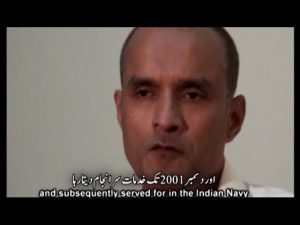
An Indian intelligence operative, Ajay Kumar, operated under the assumed identity of Dr. Ajay Dutta while posing as a representative of a humanitarian NGO named Silk Horizon. Publicly, the organization claimed involvement in clean-water projects for underdeveloped communities.
Silk Horizon’s declared mission was to dig clean-water wells in underdeveloped villages, but behind the scenes it was a web whose links stretched from an accountant in London to a treasury officer in Baku.
Within six months, Ajay successfully recruited dozens of local volunteers, including vloggers, translators, and sympathetic social workers. Most believed they were participating in humanitarian outreach. Everyone believed they were serving humanity, whereas in reality they were working for India.
Unbeknownst to them, they were being systematically leveraged for intelligence gathering, digital amplification, and network expansion on behalf of India’s Research and Analysis Wing (RAW). A warehouse in Baku, officially listed as Silk Horizon’s relief storage facility, was in fact home to a high-frequency data server. It concealed a high-frequency data server hub.
The system scanned thousands of social media posts daily, extracting metadata such as geolocation tags, linguistic markers, family-name spellings, and emotional language patterns every day. It extracted location tags, linguistic habits, family spellings, and emotional language patterns. These analytical indexes enabled the identification, mapping, and tracking of online activists and influence nodes across multiple regions.
Through the same technique, the Chechen IT specialist Yousuf Tashif, embedded in the BLA media cell, was traced — a man who traveled frequently to Istanbul on an Iranian passport, while simultaneously supplied information and served as a key source of advanced weapons.
In March 2024, a shipping container departed from Turkey’s port of Mersin. On paper it was listed as agricultural drip-irrigation equipment.
In reality, it contained dismantled parts of FIM-92 Stinger missiles, carefully cut up and concealed in new packaging to avoid detection. Ajay prepared falsified “human development mission” documents in the name of Silk Horizon and, through three fake Afghan drivers, delivered the container to Zahedan.
The next phase was to move it, under the label of Baloch scrap, to a secret workshop in Turbat, where the missile components were to be reassembled with firing mechanisms.
The plan was that if this experiment succeeded, the next target would be Pakistan Navy coastal radars, which could be destroyed with relative ease with man-portable air-defense systems.
When Pakistan’s ISI cyber wing noticed an unusual surge in activity within the Chechen-linked digital networks, it contacted the Turkish intelligence agency. The Turkish agency began installing RFID trackers on suspicious containers leaving the Mersin port.
On the morning of April 4, when that same container approached the tri-border region of Pakistan, Iran, and Azerbaijan, the satellite link suddenly went dead.
Moments later, a coordinated interception unfolded. Commandos, some bearing Turkish insignia and others marked with green crescent patches, emerged through smoke cover and issued a clear command:
Ajay had the vehicle stopped, took a few deep breaths, and as soon as he turned toward the driver, commandos emerged from all sides under the cover of smoke and fog. Some bore green crescent insignia on their shoulders, others the Turkish star on their arms, and a clear voice echoed through the air: “Ajay Kumar, drop your sat phone…”
Ajay hesitated for a moment, then pulled the satellite phone from his pocket and placed it on the ground. For the first time, he felt that even icy air could be soaked with sweat. He knew the game was over.
Ajay Kumar’s arrest tore away many veils. The facts revealed through a joint investigation by intelligence agencies were enough to shake the region’s strategic landscape.
A database of more than 400 fake Baloch and Chechen accounts found in Baku was completely destroyed, crippling RAW’s regional propaganda and influence network.
The arms-smuggling corridor from Mersin to Zahedan and then to Turbat was shut down. Funding networks operating through bank channels in Delhi and London were frozen, and Yousuf Tashif’s dual identity was exposed, placing him on the international wanted list.
Data recovered from Ajay’s laptop and drives showed that his activities were not limited to propaganda or weapons alone. He possessed AI algorithms capable of predicting potential protest slogans and demonstrations and preparing video content in advance, which was later made viral on social media under the label of an “organic movement.”
These influence campaigns were deliberately targeted at Balochistan, Khyber Pakhtunkhwa, and parts of the Caucasus, indicating a coordinated effort to manufacture unrest and shape perception across multiple fault lines.
The case illustrates how modern intelligence operations increasingly blend humanitarian cover, digital manipulation, artificial intelligence, and covert logistics into a unified hybrid warfare architecture.
It also underscores the growing importance of cyber intelligence, inter-agency cooperation, and regional coordination in dismantling transnational destabilization networks before they mature into kinetic threats.
About the Author
Brigadier (Retd) Asif Haroon Raja is a war veteran who fought in the Battle of Hilli in former East Pakistan and recovered the body of Major Akram Shaheed, NH. He is Command and Staff Course and War Course qualified, holds an MSc in War Studies, and served as Defence Attaché in Egypt and Sudan, as well as Dean of the Corps of Military Attachés in Cairo.
He served as the Pakistan Army’s spokesperson in 1992 and later as Honorary Colonel of the battalion he commanded for eight years. He is a defence, security, and geopolitical analyst, international columnist, author of five books, former Chairman of Thinkers Forum Pakistan, Patron-in-Chief of CDS Think Tank, Director of Meesakh Research Centre, and regularly appears on national and international media platforms.


