
Yasin Malik’s New Prosecution:Justice Delayed or Judicial Harassment?
By The filing of a 737-page chargesheet by Kashmir’s State Investigation Agency (SIA) before a Special Court in Srinagar against Yasin Malik and four others in connection with the 1990 abduction and murder of nurse Sarla Bhat raises profound legal and political questions. Coming more than three decades after the incident, the prosecution has inevitably reignited debate over justice, accountability and the use of criminal law in one of the world’s longest-running political conflicts.
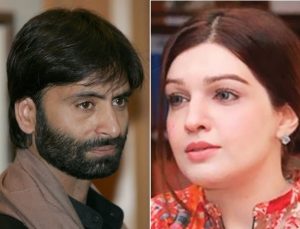
Yasin Malik, currently serving a life sentence in Tihar Jail, has once again become the focus of a high-profile prosecution. The other four individuals named in the chargesheet are Abdul Hameed Sheikh, Ghulam Muhammad, Muhammad Yousuf and Khurshid Ahmed Chalko. Three of them died years ago, while the whereabouts of the fourth remain unknown.
According to the SIA, the chargesheet demonstrates that serious offences connected to militancy will continue to be investigated regardless of how much time has elapsed. The agency further alleges that the murder formed part of a broader campaign intended to spread fear among Kashmiri Pandits and facilitate their displacement from the Valley.
Malik’s lawyer, Advocate Adil Pandit, rejects these allegations, arguing that the prosecution has produced no credible evidence linking his client to the crime. He has stated that the case rests largely on the statement of a protected witness claiming to have overheard Malik discussing the incident and has maintained that Malik was seriously ill and later imprisoned during the relevant period. Pandit has also pointed out that the chargesheet reportedly contains no allegation of rape despite widespread public reporting suggesting otherwise.
Whether these competing claims withstand judicial scrutiny remains for the courts to determine. Nevertheless, the extraordinary delay in bringing this case naturally raises questions about the administration of justice. Delayed prosecutions are not inherently illegitimate, particularly in cases involving serious crimes. However, when key accused individuals have died and decades have passed, concerns about the reliability of evidence, fading memories and the ability of defendants to receive a fair trial become unavoidable.
The allegations also appear difficult to reconcile with Malik’s long public advocacy against communal politics. In a 2004 interview with the International Socialist Review, Malik described Kashmiriyat as a shared cultural and spiritual tradition rooted in both Hindu and Muslim heritage. He argued that Kashmir had historically resisted communal violence and warned against attempts to communalize the Kashmir dispute. Referring to the Amarnath pilgrimage, he noted that its custodians had traditionally been Muslims and recalled Mahatma Gandhi’s observation that Kashmir represented a rare “ray of hope” during the communal violence of 1947.
Critics may dismiss such statements as political rhetoric. Yet they form part of a consistent public record that deserves consideration alongside the allegations now being advanced.
The timing of the prosecution also invites legitimate questions. Malik is already serving a life sentence and continues to face proceedings that could potentially expose him to even harsher punishment. Against that backdrop, it is reasonable to ask whether reopening a 35-year-old case primarily serves the interests of justice or whether it risks creating the perception of continuing judicial harassment against a political opponent.
The SIA has stated that its investigation is supported by oral testimony, documentary records, forensic and ballistic evidence, medical reports, electronic material and extensive field investigations. Those claims will ultimately be tested in court.
History nevertheless reminds us to approach official narratives of Government of India with caution. In Danger in Kashmir, Dr. Joseph Korbel, who chaired the United Nations Commission for India and Pakistan (UNCIP), on pages 148-149, described witnessing attempts during the Commission’s 1948 visit to Kashmir to stage supposedly spontaneous demonstrations supporting the government. He recounted how an individual who attempted to voice a contrary political opinion was removed by police and later replaced before the Commission by another person. When this fact was brought to the Commissioner’s attention, he insisted thar it was the same person, but the substitute himself disrupted the attempted deception. ‘Yes’, he said. ‘I am somebody else. My friend is in prisons, but it does not matter; I can also tell you, that we want to join Pakistan.’ Joseph Korbel’s account illustrates why independent scrutiny of evidence has always been essential in politically sensitive prosecutions.
To understand why this case has generated international attention, it is necessary to consider Malik’s subsequent political evolution. Once associated with armed militancy, he publicly renounced violence in the 1990s and thereafter consistently advocated a peaceful resolution of the Kashmir dispute through dialogue involving India, Pakistan and the people of Jammu and Kashmir.
His transformation received recognition from a number of Indian public figures. Veteran journalist and former Indian High Commissioner to the United Kingdom Kuldeep Nayar wrote in 1999 that Malik had embraced non-violence and become “a follower of Mahatma Gandhi.” In 2007, journalist Bharat Bhushan observed that Malik was attempting to train young Kashmiris in non-violent politics inspired by Sufism and Gandhian principles.
His commitment to dialogue also resulted in official engagement with the Government of India. During Prime Minister Dr. Manmohan Singh’s tenure, Malik participated in discussions aimed at advancing a peaceful political process. He also met senior officials, members of Congress, academics, policy institutes and human rights organizations during visits to the United States and Pakistan to encourage renewed dialogue on Kashmir.
Among his most significant non-violent initiatives was the “Voices for Peace, Voices for Freedom” campaign, which displayed approximately 1.5 million signatures collected from Kashmiris calling for a peaceful resolution of the dispute through democratic means. The campaign received support from prominent civil society figures, including Noted Gandhian leader Nirmala Desh Pandey, Arundhati Roy, Praful Bidwai, Kuldeep Nayar and the late Pakistani human rights defender Asma Jahangir.
Today, Malik reportedly suffers from multiple serious health conditions, including the long-term effects of heart surgery, kidney disease, hearing impairment and injuries allegedly sustained during detention. Reports concerning his medical treatment and conditions of confinement deserve careful and independent scrutiny consistent with international human rights standards.
Whatever one’s political views on Kashmir, every accused person is entitled to due process, a fair trial and the presumption of innocence until proven guilty. Justice must not only be done; it must also be seen to be done.
The international community, including the relevant United Nations Special Rapporteurs and respected human rights organizations such as Amnesty International, Human Rights Watch and the International Federation for Human Rights (FIDH), should closely monitor these proceedings and encourage full compliance with international standards of fairness, transparency and due process. Such scrutiny would serve not to prejudge the outcome but to reinforce confidence that justice is being administered impartially.
In deeply contested conflicts, the legitimacy of legal proceedings depends not only upon convictions but upon public confidence that courts remain independent, evidence-based and free from political influence. That principle is essential not only for Yasin Malik, but for the rule of law itself.


