
Dialogue Without Kashmir Is an Incomplete Peace Process
By Dr. Ghulam Nabi Fai, Chairman World Forum for Peace & Justice.
A significant political signal emerged from India on May 12, 2026, when the Secretary General of the Rashtriya Swayamsevak Sangh (RSS), Dattatreya Hosabale, publicly advocated the continuation of dialogue with Pakistan. His statement that “we should not shut the doors completely” and that “there should always be a window of dialogue” was not merely a routine diplomatic observation. Coming from the ideological mentor of the Bharatiya Janata Party (BJP), the ruling party in India, the remarks carried profound political meaning.
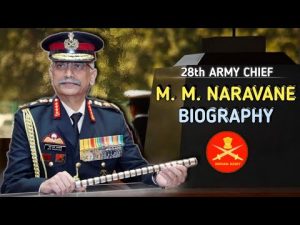
Hosabale’s emphasis on maintaining diplomatic channels and encouraging civil society engagement reflects a growing realization within influential circles in India that perpetual hostility between two nuclear-armed neighbors is neither sustainable nor productive. His statement was quickly endorsed by former Indian Army Chief General Manoj Mukund Naravane, who observed that friendship between people can ultimately foster friendship between nations.
Equally important was the response from Mehbooba Mufti, former Chief Minister of Jammu & Kashmir, who welcomed the opening for dialogue but insisted that Kashmir itself must remain central to any meaningful peace process. She correctly argued that talks with Pakistan alone cannot address the aspirations and grievances of the people who live in the disputed territory.
These developments may appear modest, but in the highly polarized political climate of South Asia, they are noteworthy. For years, any suggestion of engagement with Pakistan was often dismissed in India as politically risky or strategically weak. Yet the recent comments indicate that some influential voices in New Delhi may finally be acknowledging a fundamental reality: there is no military solution to the Kashmir dispute.
India has maintained an enormous military presence in Kashmir for decades. Despite overwhelming force, repeated crackdowns, prolonged detentions, and extensive security operations, the conflict remains unresolved. The persistence of unrest demonstrates that military dominance cannot substitute for political legitimacy or public consent.
This reality has not gone unnoticed by thoughtful observers within India itself. Distinguished intellectuals, journalists, military officials, and human rights advocates have repeatedly questioned both the moral and practical costs of New Delhi’s Kashmir policy.
Arundhati Roy, the internationally acclaimed Booker Prize-winning author, described Kashmir as “the most densely militarized zone in the world,” pointing to the immense human suffering created by decades of militarization.
Veteran Indian journalist Vir Sanghvi once asked a question that still resonates deeply: “Why are we still hanging on to Kashmir if the Kashmiris don’t want to have anything to do with us?” He went further, advocating a referendum to allow the people of Kashmir to determine their own future.
Similarly, columnist Swaminathan Aiyar reminded India of its own historical commitment to a plebiscite in Kashmir and argued that the people themselves should decide their political destiny.
Prominent human rights advocate Gautam Navlakha also warned that the Indian state risked becoming “its own worst enemy” by refusing to confront the political alienation in Jammu & Kashmir.
Professor Sumantra Bose of the London School of Economics warned that frozen conflicts do not remain frozen forever and that opportunities for meaningful solutions can disappear if ignored.
The importance of the RSS statement, therefore, lies not only in its immediate diplomatic implications but in the broader possibility that saner and more pragmatic minds may be gaining influence in India’s policy discourse. Dialogue is always preferable to confrontation, particularly between nuclear powers whose conflicts threaten regional and global stability.
However, history also teaches an equally important lesson: bilateral talks between India and Pakistan alone have consistently failed to produce a durable settlement. Since 1948, there have been countless rounds of negotiations between New Delhi and Islamabad. Yet the core dispute persists because the principal stakeholders — the people of Jammu & Kashmir — were never meaningfully represented in those negotiations.
Peace processes cannot succeed when the people most directly affected are excluded from the table. When India and Pakistan speak without Kashmiris, the discussions remain incomplete. Likewise, internal dialogues within Kashmir that exclude Pakistan cannot address the broader regional dimensions of the dispute.
The path forward requires courage, realism, and inclusivity. Any future engagement — whether through formal diplomacy, track-two initiatives, civil society contacts, or quiet diplomacy — must include authentic representatives of the Kashmiri people. Without their participation, negotiations risk becoming another exercise in political management rather than genuine conflict resolution.
Recent suggestions from U.S. Secretary of State Marco Rubio encouraging dialogue between the national security advisers of India and Pakistan may provide a useful opening. But for such talks to become meaningful and sustainable, Kashmiri representation must also be incorporated into the process.
The emerging voices within India calling for dialogue deserve recognition and encouragement. They represent an important departure from rigid absolutism and perpetual confrontation. Yet dialogue alone is not enough. The real challenge is to create a peace process that is inclusive, credible, and just.
Kashmir cannot remain merely a subject discussed by others. The people of Kashmir must become participants in shaping their own future. Only then can dialogue evolve from a diplomatic ritual into a genuine pathway toward peace, dignity, and reconciliation.


