
Pakistan-Afghanistan Relations: From Shared Brotherhood to Conflict and Betrayal – Part Three & Four
By Asif Haroon Raja
ndia’s Military Adventure
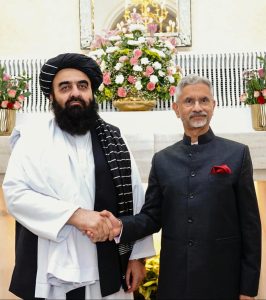
Against the backdrop of its expanding strategic partnerships with the United States and other Western powers, India’s growing defence capabilities, and its increasing international stature as a counterweight to China in the Indo-Pacific, the Modi government appeared to conclude that the regional strategic environment was favourable for adopting a more assertive military posture towards Pakistan.
Simultaneously confronted with internal political challenges, economic pressures and an intensifying terrorist campaign along its western frontier, Pakistan was widely perceived in New Delhi as being strategically overstretched.
The terrorist attack at Pahalgam on 22 April 2025 became the immediate catalyst for the crisis. India promptly blamed Pakistan-based militant groups, mobilised diplomatic support, and generated intense public pressure for military retaliation.
Pakistan denied any involvement, rejected the allegations as premature, and called for an impartial international investigation.
Nevertheless, bilateral tensions rapidly escalated, bringing the two nuclear-armed neighbours to the brink of a full-scale war.
India’s Military Adventure And Pakistan’s Robust Response
On the night of 6–7 May, India launched air strikes against multiple targets inside Pakistan, asserting that they were directed against terrorist infrastructure.
The Indian air strikes hit mosques, madrassas and civilian areas, resulting in civilian casualties.
The Pakistan Air Force (PAF) responded immediately, intercepting the attacking formations and, according to Pakistan’s official account, and confirmed by the world reporters, inflicting significant losses on the Indian Air Force (IAF) while preserving its own operational capability.
This early aerial engagement in which the IAF lost four Rafael stealth jets and four other high profile jets (SU-30, Mirage 2000 and MiG 29) fundamentally altered the military balance and deprived India of the initiative it had expected to achieve through air power.
PAF achieved air superiority and maintained it throughout the war. President Donald Trump repeatedly asserted that India’s eight Rafaels had been shot down.
Subsequent Israeli drone incursions on 8 May and Brahmo missile strikes on 9 May also failed to produce the intended strategic effect. The Indian Navy aircraft carrier Vikrant tried to enter Pakistan’s maritime exclusive zone but beat a hasty retreat after seeing Pakistan Navy fully alert and ready to fire at the approaching carrier.
While Pakistan’s air defence network intercepted the majority of the incoming Israeli drones (90 in number), the Brahmo surface-to-surface missile attacks on military installations were interpreted in Islamabad as a significant escalation that crossed Pakistan’s declared threshold of strategic restraint.
Consequently, the Pakistan Armed Forces launched Operation Bunyan al-Marsus under the overall supervision of Chief of Army Staff General Asim Munir in the early morning of 10 May.
The operation combined precision air strikes, long-range fires and coordinated ground actions against selected military objectives, with Pakistan neutralising India’s 15 air bases, destroying two batteries of S-400, an ammunition storehouse of Brahmos, and thus gaining complete strategic initiative within a short period.
As the conflict intensified and the risks of further escalation between two nuclear-armed states became increasingly evident, intensive diplomatic efforts gathered momentum.
A ceasefire was eventually brokered through international mediation, bringing the hostilities to an end before they could expand into a prolonged conventional war under a nuclear overhang. Although Modi denied requesting several Arab States and Washington to arrange a ceasefire, Trump confirmed that he was approached, and he mediated a ceasefire on May 10.
Regardless of the differing narratives advanced by the two sides, the crisis underscored the grave dangers of military confrontation in South Asia and reaffirmed that, in the nuclear age, sustained dialogue and crisis-management mechanisms remain indispensable to regional peace and stability.
Outcome of Operation Maarka Haq
♦️ Strategic Summary of Kinetic Strikes Confirmed Targets Eliminated on May 10, 2025: –
▪️Beas: BrahMos missile depot destroyed.
▪️Udhampur: S400 Air defence systems obliterated.
▪️ Pathankot Airbase rendered inoperative; Airfield demolished.
▪️ Logistics HQ blasted.
▪️Jalandhar: Sustained precision strikes on airbase & Infrastructure critically damaged.
▪️Nagrota (Northern Command): BrahMos launch site neutralized & Operational command disrupted.
▪️Akhnoor: Brigade HQ destroyed.
▪️Uri: Supply depot flattened.
▪️Srinagar: HQ of Northern Command & Airbase made dysfunctional.
▪️Chandigarh: Weapons depot neutralized; communications disrupted.
▪️Suratgarh: Airfield destroyed.
▪️Multiple Sites (Nagrota, Jammu, Baramulla): Command and logistics nodes eliminated.
▪️ Sirsa airbase annihilated.
▪️ Military Intelligence Headquarters at Rajouri destroyed.
♦️ *Air Combat Hostile Air Assets Neutralised
▪️ Rafale Jet Engagements on night 6/7 May 2025: 4 jets downed over Sialkot, Lahore & Kashmir sectors – confirmed visual feed received.
Four other jets (SU-30, Mirage 2000 and MiG 29) were shot down.
▪️ 90+ Israeli- made Drones neutralised on 8 May.
- PAF didn’t lose a single jet and all the airbases remained functional. No loss to any military installation.
♦️ Pakistan’s Drone Strikes Deep Penetration Operations on 10 May without any loss
▪️ Jammu & Kashmir: Samba, Jammu, Uri, Nowgam, Poonch, Rajouri, Baramulla, Avantipura, Nagrota.
▪️ Punjab, Rajasthan & Border Areas
Pathankot, Pokhran, Amritsar, Ferozepur, Fazilka, Lalgarh, Jatta, Jaisalmer, Barmer, Bhuj, Kuarbet, Lakhi Nalla, Hoor Maniya.
▪️ Hisar, Haryana Missile interception
near Delhi NCR.
♦️ *Cyber Warfare Strategic Infrastructure Disruption
Energy Grid
▪️ 10 SCADA networks disabled
▪️ 70% of Northern grid offline
▪️ Urban power & wind systems shut down
Transport & Utilities
▪️ Indian Railways’ digital network destroyed
▪️ Delhi Gas and Kashmir Electric disabled
Digital Penetration
▪️ 507 high-value devices wiped out.
▪️ 150 databases exfiltrated.
▪️ 15 email servers compromised.
▪️ 13 key government sites defaced or deleted.
*High-Value Breaches Included:
▪️ UIDAI (Aadhar), Indian Air Force networks.
▪️ Maharashtra Election Commission.
▪️ Paytm Data .
▪️ Mumbai International Airport .
▪️ Over 2,500 surveillance systems infiltrated.
Defaced Entities
▪️ BJP (Madhya Pradesh), MTNL, HAL, BEML.
▪️ BSF internal files, AINTSSA, CRIAI.
▪️ 110+ corporate sites and 3 national media outline.
A UK-based strategic research firm has reportedly acknowledged Pakistan’s decisive military dominance during Maarka-e-Haq, highlighting:
- Destruction of multiple Indian aircraft, including four Rafale.
- Minimal Pakistani losses – zero combat aircraft lost.
- Indian drones neutralized by Pakistan’s air defence systems.
- Satellite imagery backing the assessment.
- Indian losses estimated at $45–$51 billion.
India’s Dilemma
After the humiliation India suffered as a result of the misadventure of Operation Sindoor, it no longer has the courage to launch a direct attack.
India appears to have concluded that neither the forcible acquisition of Kashmir, nor the military defeat of Pakistan is achievable through conventional warfare.
Having failed to attain its objectives through Operation Sindoor and unable to escalate towards a “Sindoor-2” scenario, New Delhi is increasingly relying on indirect and hybrid warfare strategies aimed at destabilizing Pakistan from within.
One dimension of this strategy is the misuse of Afghan territory to facilitate cross-border terrorism and proxy warfare in insurgency prone Pakistan’s provinces of Khyber Pakhtunkhwa (KP) and Balochistan.
Instead, it has opened two alternative fronts, the first of which is terrorism through paid proxies making use of the Afghan soil.
This war is not confined only to Fitna al-Hind and Fitna al-Khawarij. Emirati proxies are also fully active in this conflict.
Israel has, through India and Afghanistan, effectively reached Pakistan’s borders.
There is resentment over Pakistan’s growing closeness with Iran. There is also frustration over Israel’s growing diplomatic isolation in the world, and India’s humiliation on 9 May.
Above all, there is discomfort over the progress of CPEC and Gwadar; probability of Chahbahar and Gawadar ports complementing each other, and the stalled Iran-Pakistan gas pipeline getting commissioned.
The issue, much like the idea of “Greater Israel,” is that of “Greater Balochistan.” Every proxy force has its eyes fixed on Balochistan. Balochistan urgently demands the attention of the country’s leadership.
The enemy is not one—it is many.
Larry Johnson, a former CIA researcher and intelligence analyst who now appears on American media as a commentator, has made the startling claim that the Balochistan Liberation Army (BLA) and Israel have maintained intelligence cooperation for the past 46 years.
If this is true, it would mean that the BLA is now directly receiving Israeli assistance while targeting ordinary Baloch civilians.
These enemies have always become active whenever Pakistan’s national interests have advanced or whenever global opinion has begun to tilt in Pakistan’s favour.
Since the BLA has altered its strategy and launched attacks in new ways, the State must also adapt its own strategy. Most importantly, the State must treat this issue with the seriousness it deserves. Preventing suicide bombings is extremely difficult. The roots of the enemy must be cut off, and the branches will wither on their own.
Of late, Afghanistan is making extensive use of drones in the two conflict zones of KP and Baluchistan. Both India and Israel are not only providing two types of armed drones, but have also built factories at Bagram and Jalalabad for the production of drones.
The sponsors and facilitators of terrorism against Pakistan are no secret. Some are those who, after suffering defeat in direct warfare, have turned to terrorism. Others cannot digest the success of Gwadar.
As long as these facilitators exist, no number of operations or military strikes will eliminate the TTP or the BLA, because these organisations are supplying young recruits for terrorism.
Some are targeting the opportunities created by CPEC, while others are unhappy with Pakistan’s role during the Iran–United States confrontation, believing that Pakistan prevented what they describe as a Zionist plan to ignite an Arab-Iranian war.
There are many names involved. Some are exposed, while others remain behind the curtain.
As Pakistan gains greater respect within the international community, the pain and frustration of its adversaries continue to grow.
However, just as these enemies failed in the past, God willing, they will fail again. Just as Tehreek-e-Labbaik was dealt with, it is hoped that the foreign paid proxies would be eliminated and their political cover-ups BYC, PTM will also be dismantled.
Pakistan’s Enemies
There are only two countries in the world that officially maintain positions against Pakistan’s territorial integrity and openly aspire to parts of its land: India and Afghanistan.
The fundamental positions of both countries pose a threat to Pakistan’s geographical integrity, and the basis of their recent cooperation is their shared hostility towards Pakistan.
India is Pakistan’s arch enemy. Afghanistan, however, is our brotherly Islamic neighbour, and Pakistan has traditionally wished it well. This is why some people find it difficult to understand the situation.
Yet, surprisingly, these two countries share one common characteristic that needs to be understood: hostility towards Pakistan.
This is neither temporary nor circumstantial. There is historical evidence to support this claim.
India believes that the creation of Pakistan divided “Mother India.” Afghanistan believes that Pakistan’s creation divided Afghan territory.
India lays claim to parts of Pakistan’s territory, and whether the government is led by Congress or the BJP, that claim remains unchanged.
Likewise, Afghanistan also claims parts of Pakistan’s territory, and whether the government is headed by King Zahir Shah, Hamid Karzai, or the Taliban, that claim has remained consistent.
Indo-Afghan-Israel -UAE Axis
Israel and the UAE have, in varying ways, aligned with the Indo-Afghan nexus in developments that Pakistan perceives as detrimental to its security and strategic interests.
From Pakistan’s perspective, Israel views the country as an ideological challenge, while the UAE has expressed concerns over the growing significance of Gwadar Port, which it sees as a potential competitor to its regional commercial and maritime interests.
Indo-US-Israel Nexus
The United States’ longstanding strategic alignment with Israel and India is well known.
Since the early 1990s, the three countries have steadily expanded their strategic cooperation. According to many analysts in Pakistan, this convergence has sought to constrain Pakistan’s strategic capabilities, including its nuclear deterrent, and to impede the progress of the China–Pakistan Economic Corridor (CPEC).
Although President Donald Trump appeared to adopt a more favourable tone towards Pakistan following the four-day India–Pakistan conflict, while publicly criticising India, Pakistan should continue to exercise strategic caution and formulate its policies with prudence, keeping in view the fluid and evolving nature of regional and global geopolitics.
The October 2025 Border Confrontation
Against the backdrop of heightened regional tensions following the India-Pakistan conflict, relations between Islamabad and Kabul deteriorated to their lowest point since the Taliban’s return to power in 2021.
Pakistan maintained that repeated diplomatic engagement, military-to-military contacts and border coordination mechanisms had failed to persuade the Afghan authorities to dismantle the infrastructure of the Tehreek-e-Taliban Pakistan (TTP) and other anti-Pakistan militant groups operating from Afghan territory.
As cross-border terrorism continued unabated, Pakistan concluded that a more robust response had become unavoidable.
The crisis reached its peak on 11 October 2025 when coordinated attacks were launched across multiple sectors of the Pakistan-Afghanistan border in Khyber Pakhtunkhwa and Balochistan.
Pakistan attributed these attacks to militants operating with support from Afghan territory and responded with a large-scale military operation aimed at neutralising the immediate threat.
Pakistan armed forces not only repulsed the attacks but also inflicted heavy losses on the attackers, destroying numerous border posts, militant launch pads and logistical facilities.
Precision strikes were carried out against militant infrastructure at selected locations inside Afghanistan, including areas around Spin Boldak and Kandahar that Pakistan identified as staging grounds for cross-border attacks.
The scale of the confrontation highlighted the growing risk that continued instability along the western frontier could develop into a wider interstate conflict.
It also underscored the urgent need for effective border management, verifiable counterterrorism cooperation and sustained diplomatic engagement between the two neighbouring states.
Diplomatic Efforts
Recognising the potentially catastrophic consequences of prolonged hostilities, regional partners, including Qatar, Saudi Arabia, the United Arab Emirates and Türkiye, intensified diplomatic efforts to defuse the crisis.
Responding to these initiatives, Pakistan agreed to participate in talks aimed at restoring stability and establishing a framework for addressing its long-standing security concerns.
The willingness of both sides to return to the negotiating table demonstrated that, despite deep mistrust and recurring confrontation, diplomacy remained the only viable path to preventing a prolonged conflict between two countries whose geography, history, faith and economic future remain inextricably linked.
The Doha Peace Talks
The military confrontation was followed by intensive diplomatic efforts led by Qatar and supported by other friendly regional states to prevent further escalation of hostilities.
After a prolonged deadlock, direct negotiations between the Pakistani and Afghan delegations finally commenced in Doha. The lengthy impasse itself reflected the depth of mistrust that had accumulated between the two neighbours.
The principal difference centred on the Tehreek-e-Taliban Pakistan (TTP). While the Afghan delegation reportedly sought an immediate ceasefire and the restoration of normal trade and transit arrangements, Pakistan maintained that no durable settlement was possible unless Kabul took credible action to prevent Afghan territory from being used for cross-border terrorism.
Islamabad argued that the TTP issue lay at the heart of the crisis and therefore had to be addressed before any lasting confidence-building measures could succeed.
By the conclusion of the talks, the Afghan side reportedly reaffirmed that its territory would not be allowed to be used against Pakistan and expressed its willingness to continue discussions on border security and related issues.
Although the agreement represented only an initial understanding rather than a comprehensive settlement, it created a diplomatic opening for further negotiations scheduled to continue in Türkiye.
From Pakistan’s perspective, the Doha dialogue achieved an important diplomatic objective by bringing its security concerns regarding cross-border terrorism to the forefront of regional and international attention.
The ultimate success of the process, however, depended not on declarations but on the implementation of concrete and verifiable measures against militant groups operating from Afghan soil.
Former Afghan Vice President Amrullah Saleh also argued that the negotiations placed the Taliban in a difficult diplomatic position by compelling them either to acknowledge responsibility for the TTP or to demonstrate their willingness and ability to act against it.
Pakistan’s Strategic Accomplishments
The Pakistan Armed Forces remain one of the most professional military institutions in the region, possessing the capability to confront and defeat adversaries across the full spectrum of conflict.
History bears witness to their performance in multiple wars against India, culminating in what the world regards as a comprehensive military success during the four-day conflict of May 2025.
On the western front, Pakistan twice repulsed incursions by the Afghan Taliban forces, inflicting substantial casualties on both hostile troops and Khawarij militants. Security forces also captured a number of border posts and established defensive buffer zones in vulnerable sectors to enhance border security and deny militants freedom of movement.
Despite facing an Indian military that is nearly five times larger and enjoys significantly greater material resources, Pakistan continues to stand as a formidable defensive wall along its eastern borders.
Through superior professionalism, operational readiness, and strategic resolve, it has maintained a credible deterrent against external aggression.
Pakistan’s achievements, however, have not been confined to the military domain alone. Within a remarkably challenging regional environment, Islamabad simultaneously managed multiple diplomatic, security, and strategic objectives.
It supported Iran during a period of heightened regional tension, engaged the United States through diplomacy, responded firmly to security challenges emanating from Afghanistan, and successfully countered Indian military adventurism.
At the same time, Pakistan maintained close strategic consultations with China, strengthened its defence cooperation with Saudi Arabia, deepened its engagement with Russia, and demonstrated financial credibility by honouring its international commitments.
The country’s growing diplomatic relevance was further reflected in the numerous expressions of support, appreciation, and outreach it received from capitals across the world.
Taken together, these developments underscore Pakistan’s emergence as a resilient regional actor capable of balancing military preparedness, diplomatic engagement, and strategic foresight in an increasingly turbulent geopolitical environment.
To be concluded About the Author
Brigadier (Retd) Asif Haroon Raja, SI (M) is a war veteran. He is Command and Staff Course and War Course qualified, holds an MSc in War Studies, and served as Defence Attaché in Egypt and Sudan, as well as Dean of the Corps of Military Attachés in Cairo.
He is a defence, security, and geopolitical analyst, columnist, featured columnist of IntelDrop magazine Washington, author of five books, former Chairman of Thinkers Forum Pakistan, Patron-in-Chief of Centre for Development Studies Think Tank, Director of Meesakh Research Centre; he regularly appears on media platforms.


