
Pakistan-Afghanistan Relations: From Shared Brotherhood to Conflict and Betrayal – Part Six
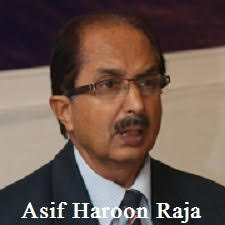
By Asif Haroon Raja
Propaganda War
The BLA, BLF and Baloch Raaji Aajoi Sangar (BRAS) have developed a coordinated propaganda campaign that blends genuine public grievances with fabricated or exaggerated narratives. The objective is to undermine the legitimacy of the state, facilitate recruitment, mobilize support, and raise funds from sections of the Baloch diaspora that are receptive to such messaging.
Their media cells continuously disseminate misleading reports, manipulated videos, and disinformation through both conventional and social media platforms.
Their propaganda efforts are directed not only at economically disadvantaged Baloch youth but also at students studying in prestigious colleges and universities in Punjab and Islamabad.
These students are frequently reminded of the stark disparities in educational opportunities and socio-economic development between Balochistan and the more developed provinces.
Genuine concerns over deprivation and uneven development are repeatedly highlighted and amplified to foster resentment, alienation, and hostility towards the federation.
Regrettably, successive governments failed to counter these narratives effectively. This vacuum in strategic communication—reminiscent of the failure to contest hostile propaganda before the 1971 breakup of Pakistan—enabled local propagandists, supported by external mentors and sponsors, to dominate the information space with misinformation, disinformation, and distorted historical narratives.
Since 2018, this propaganda apparatus has become increasingly sophisticated, exploiting the reach and anonymity of digital and social media. India, Afghanistan and Israel are giving teeth to the propaganda campaign.
Narratives of deprivation, marginalisation, and exploitation—promoted for decades by tribal elites, separatist groups, and other vested interests—have been repeated so persistently, and left so largely unchallenged, that many people, particularly younger generations, have come to accept them as established truths.
The Collapse of the Doha Understanding
The understandings reached during the Doha talks proved to be short-lived. Despite assurances that Afghan territory would not be used for activities threatening Pakistan’s security, cross-border terrorism not only continued but intensified.
Shortly afterward, Taliban forces reportedly launched attacks on Pakistan at 53 different locations under the cover of darkness.
Pakistan complained that, notwithstanding the diplomatic efforts of Qatar and the constructive engagement of China, Iran and Russia aimed at reducing tensions, militants operating from Afghan territory launched coordinated attacks on more than fifty locations across several districts of Khyber Pakhtunkhwa in February 2026.
In response, Pakistan not only overran all of their forward positions but also advanced several kilometres inside Afghan territory.
Pakistan attributed these attacks to groups operating from sanctuaries inside Afghanistan and concluded that diplomatic engagement alone had failed to address its core security concerns.
Consequently, it authorised a series of precision strikes against the known terrorist infrastructure and launch pads inside Afghan territory at Paktika, Paktia and Kunar.
Responding to criticism over its strikes on terrorist sanctuaries inside Afghanistan and India’s objections, Pakistan stated:
“It may be deeply painful for India that we have destroyed terrorist bases established with its support. We will not stop. These operations against terrorists will continue.”
Pakistan’s Strong Rebuttal to India at the UN Security Council
India strongly criticised Pakistan’s cross-border military actions, while Pakistan defended its position before the United Nations, arguing that every sovereign state possesses the inherent right of self-defence against armed attacks originating from across its borders when the host state is unwilling or unable to prevent them.
These developments demonstrated that, in the absence of credible and verifiable action against militant groups, diplomatic assurances alone were insufficient to restore confidence.
Escalation of Terrorism in 2026
The collapse of the Doha understanding paved the way for the more serious military confrontation that followed later in 2026. The security situation further deteriorated during April, May and June as terrorist organisations carried out a series of high-profile attacks, including a major assault on a Pakistan Rangers installation in Karachi in June, an attack on FC check post in Jiwani, attacks in Bannu and Ziarat.
Rather than reducing tensions, the exchanges of force were accompanied by increasingly hostile rhetoric. Some senior Afghan officials issued statements threatening to carry the conflict into Pakistani territory.
Only a few weeks ago, Abdul Hamid Khorasani, commander of the Taliban’s Badri Force, declared in a televised interview that if the Amir al-Mu’minin granted permission, they could capture Peshawar and Quetta within 24 hours.
Significantly, Abdul Hamid Khorasani himself was reportedly among the first to be killed during Pakistan’s retaliatory operation.
Now another Taliban military commander, Abdul Hadi Himmat, claims that if the Amir al-Mu’minin grants permission, Taliban forces could reach Quetta and Peshawar the very next night. This naturally raises the question: were the previous two mass attacks carried out without such permission?
Ironically, the Taliban are now reportedly seeking China’s mediation, asking Pakistan to return the areas it captured during the fighting and to allow them to re-establish checkpoints on their own side of the border.
When Gratitude Gave Way to Hostility
Throughout its history, Afghanistan has often served as an arena for great-power rivalry. Few countries, apart from some in Africa, have escaped foreign invasions at one time or another.
Yet, for the first time, Afghanistan found a neighbour like Pakistan, which extended extensive support during the anti-Soviet jihad and later during the resistance against the US-led intervention, enabling Afghan fighters to ultimately see foreign forces withdraw.
Many Pakistani military officers devoted considerable effort to training and supporting Afghan fighters.
Today, however, after receiving encouragement from India, the same groups have turned hostile toward the country that once stood by them.
If they are determined to attack the very country that supported them for decades, they may do so—but they should also be prepared for a response far stronger than before.
Diplomatic Isolation of Afghanistan and Pakistan’s Growing Relevance
Afghanistan’s diplomatic isolation is increasing rapidly. The defacto Afghan government has failed to convince the international community of its narrative against Pakistan’s military operations.
Three major powers have now effectively tilted toward Pakistan. China has supported Pakistan from the outset, Russia has urged dialogue while encouraging Afghanistan to engage constructively with Pakistan, and the United States has issued perhaps the strongest statement by affirming Pakistan’s right to defend itself.
Responding to Pakistan’s airstrikes against known terrorist hideouts inside Afghanistan, the State Department of the US stated that Pakistan has the right to defend its territory and its people from terrorist attacks.
Following similar expressions of understanding from the United Kingdom and the European Union, the United States has also publicly endorsed Pakistan’s right to conduct military operations against terrorist sanctuaries in Afghanistan.
On an earlier occasion, when Pakistan struck what it described as a major terrorist facility inside Afghanistan, Afghan authorities claimed that a hospital had been targeted.
Subsequently, European representatives visited the site to investigate. Their findings did not substantiate the claim that a hospital had been struck.
Instead, the inspection concluded that the location had been used for purposes inconsistent with a functioning medical facility, lending support to Pakistan’s assertion that it was a terrorist hideout rather than a civilian hospital.
Lessons and the Way Forward
The history of Pakistan-Afghanistan relations demonstrates that neither prolonged confrontation nor tactical cooperation has produced lasting stability.
Despite sharing a common faith, centuries-old cultural and ethnic ties, extensive economic interdependence and a 2,600-kilometre border, the two neighbours have repeatedly oscillated between periods of close cooperation and deep mistrust.
Historical disputes, competing security perceptions, cross-border militancy, external interference and the failure to establish durable institutional mechanisms for resolving differences have together prevented the emergence of a stable and mutually beneficial relationship.
No country has a greater stake in Afghanistan’s peace and stability than Pakistan, just as no country stands to benefit more from peaceful relations with Pakistan than Afghanistan.
Geography is an unalterable reality. The destinies of the two countries are inextricably linked, and neither can achieve lasting peace or economic prosperity at the expense of the other.
Continued hostility will only provide opportunities for transnational terrorist organisations and external powers to exploit regional divisions to the detriment of both nations.
The United States, China, Russia, the United Kingdom, and the European Union have, to varying degrees, acknowledged Pakistan’s legitimate security concerns arising from cross-border terrorism.
Likewise China, Russia, Central Asian States, Iran Turkiye and the Arab States are favourably inclined towards Pakistan. Islamabad should capitalise on this growing international understanding by mobilising diplomatic support to exert sustained pressure on Kabul to deny sanctuary to terrorist groups and to honour its commitment that Afghan soil will not be used for terrorist activities against Pakistan.
For any meaningful rapprochement to succeed, Afghanistan must ensure that its territory is not used by any individual or group to threaten Pakistan’s security, while Pakistan should continue to pursue engagement through sustained diplomacy, economic cooperation and mutually acceptable border-management arrangements.
Counterterrorism cooperation, intelligence sharing, expanded trade and transit, and regional connectivity projects can create shared interests that gradually reduce mutual suspicion and strengthen confidence.
Ultimately, peace between Pakistan and Afghanistan cannot be imposed by military means alone, nor can it be sustained solely through periodic negotiations.
It requires political will, mutual respect for each other’s sovereignty and legitimate security concerns, and a shared commitment to preventing external rivalries from turning Afghanistan into a theatre of proxy competition.
The current deterioration in Pakistan-Afghanistan relations serves neither country’s long-term interests.
Continued confrontation will primarily benefit external powers seeking strategic leverage in the region, while stability can only be restored through sustained counterterrorism cooperation and meaningful diplomatic engagement.
If both countries can rise above the burdens of history and build a relationship founded on trust, reciprocity and common interests, they can transform one of Asia’s most volatile frontiers into a bridge linking South Asia, Central Asia and the Middle East.
Such an outcome would not only serve the interests of Pakistan and Afghanistan but also contribute significantly to regional peace, stability and economic integration.
Concluded About the Author
Brigadier (Retd) Asif Haroon Raja, SI (M) is a war veteran. He is Command and Staff Course and War Course qualified, holds an MSc in War Studies, and served as Defence Attaché in Egypt and Sudan, as well as Dean of the Corps of Military Attachés in Cairo.
He is a defence, security, and geopolitical analyst, columnist, featured columnist of IntelDrop magazine Washington, author of five books, former Chairman of Thinkers Forum Pakistan, Patron-in-Chief of Centre for Development Studies Think Tank, Director of Meesakh Research Centre; he regularly appears on media platforms.


